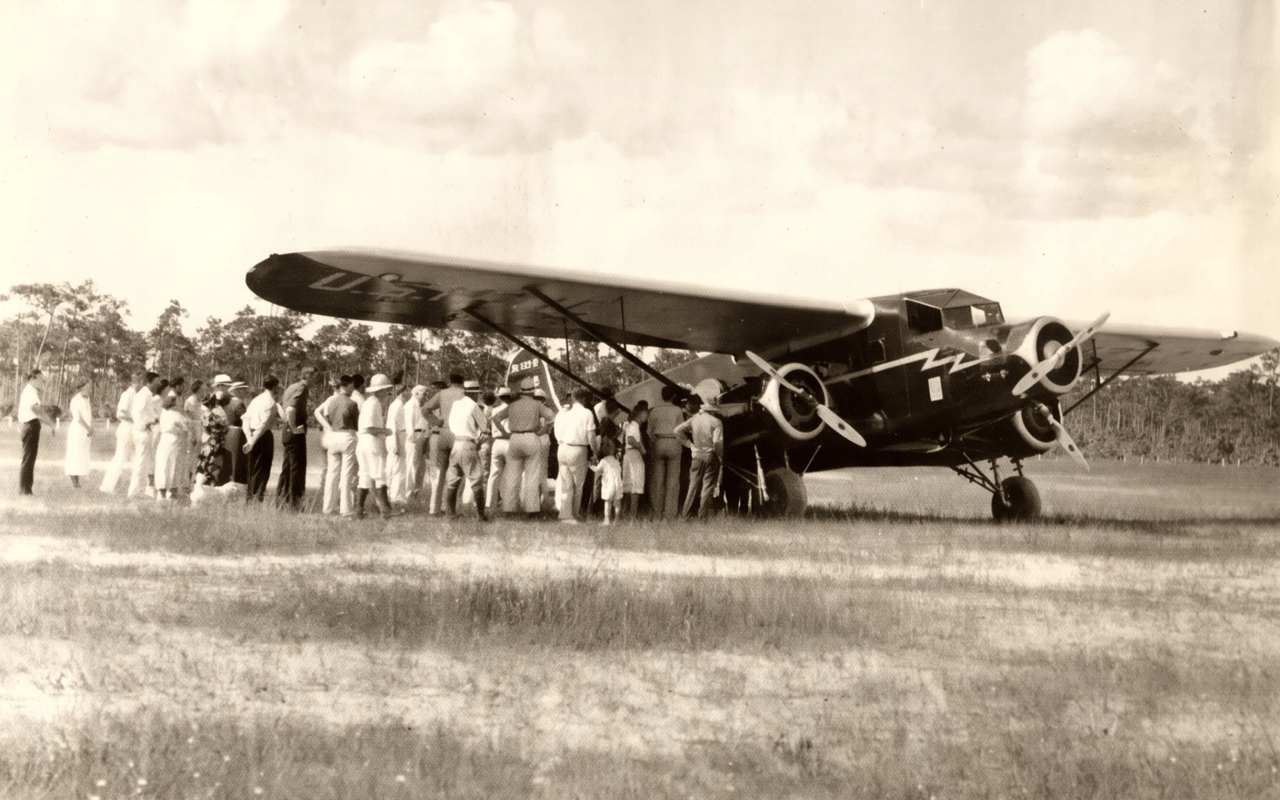
Page Field Airport: The Fort Myers Golf Course That Became a World War II Air Base
Fort Myers Rising
What if I told you that one of Fort Myers' most historic airports was never supposed to be an airport at all?
In fact, the original plan was to build a golf course.
Today, Page Field Airport is a familiar landmark along US-41 in Fort Myers, Florida. But nearly a century ago, this property was at the center of a very different vision for the growing city.
And what happened next would connect this little Southwest Florida community to some of the most significant events of World War II.
From military bombers flying overhead to German prisoners of war stationed on the property, the history of Page Field is anything but ordinary.
The story begins in 1924, when the City of Fort Myers purchased 160 acres of land for $18,000.
The original purpose? A municipal golf course.
At the time, aviation was capturing America's imagination, and Fort Myers was beginning to recognize the possibilities of air travel.
By 1926, the city had cleared a landing field on the property, assuring residents that the new aviation facilities wouldn't interfere with plans for the golf course.
Of course, history had other plans.
Those early runways were far from ideal. Conditions were so rough that Florida Airways eventually discontinued its service to Fort Myers.
But aviation continued to develop, and by 1937, National Airlines had introduced passenger service to the city.
For a relatively small Southwest Florida town, having commercial flights was a significant step toward becoming more connected to the rest of the country.
And just a few years later, the airport's role would change dramatically.
Following the United States' entry into World War II, Page Field became part of the nation's expanding military aviation network.
In March 1942, approximately 400 soldiers arrived from Louisiana, accompanied by supplies transported in 18 railroad cars.
Almost overnight, the quiet airfield was becoming a military installation.
Imagine living in Fort Myers during those years and hearing the roar of B-24 bombers overhead.
The airport became a training ground for military aviators, bringing aircraft, personnel, and wartime activity to a community that had previously been known for its fishing, agriculture, and winter visitors.
In May 1942, the airport was renamed Channing Page Field in honor of Channing Page, a decorated World War I pilot who died in a 1920 aircraft accident near the Everglades.
His name would become a lasting part of Fort Myers aviation history.
By 1943, P-39 fighter aircraft were training in the skies over Southwest Florida.
Military activity extended beyond the airport itself.
The armed forces also developed a target range on Sanibel Island, connecting the barrier island to the region's wartime aviation operations.
It's an unexpected chapter in the history of a place now widely associated with beautiful beaches, shelling, and coastal living.
While the aircraft and military operations were an important part of Page Field's wartime story, everyday life at the base came with challenges of its own.
Military life at Page Field wasn't all aircraft and training exercises.
Soldiers also had to contend with some very familiar Southwest Florida problems.
Historical accounts describe battles with bedbugs and relentless mosquito swarms, conditions that made daily life at the base uncomfortable.
Apparently, even military training couldn't prepare everyone for Florida's mosquitoes!
It's a small but memorable detail that offers a more personal glimpse into life at Page Field during the war.
And by 1945, the airfield would take on another unexpected role.
In February 1945, German prisoners of war arrived in the Fort Myers area.
According to the airport's wartime history, 25 prisoners were assigned to Page Field to help prepare facilities for additional prisoners.
It's a part of local history that many people driving past the airport today may never have heard about.
For a period, this Southwest Florida airfield was connected not only to military aviation training but also to the broader prisoner-of-war system operating in the United States during World War II.
When the war ended, however, Page Field was ready to begin another chapter.
After World War II, Page Field returned to civilian aviation.
Commercial air travel was evolving, and Fort Myers was growing alongside it.
By 1965, the city had entered the jet age, with Boeing 727 passenger service connecting Fort Myers to New York.
For Southwest Florida, this represented a major shift in accessibility.
Air travel was making it easier for visitors, seasonal residents, and future homeowners to discover the region.
But as the population increased and demand for commercial flights grew, Page Field faced limitations.
The airport that had once been more than enough for a small Florida town could no longer accommodate the region's expanding aviation needs.
Eventually, Southwest Florida would need a larger commercial airport to support its growth.
That transition would help shape the modern aviation system serving Fort Myers, Cape Coral, Sanibel, Pine Island, and the surrounding communities.
Today, Page Field continues operating as a general aviation airport, serving private aircraft, business aviation, and other non-airline operations.
Most people passing along US-41 probably don't give much thought to the history behind the runways.
But this property has witnessed nearly a century of change.
It began as land intended for a golf course, became one of Fort Myers' earliest aviation facilities, played a role in World War II, and helped connect Southwest Florida to the wider world through commercial air travel.
For anyone interested in Fort Myers history, Southwest Florida development, or how the region grew into the community we know today, Page Field offers a fascinating reminder that some of the most important local stories are hiding in everyday places.
And it's another example of how transportation, infrastructure, and historic landmarks have influenced the growth of Fort Myers neighborhoods and Southwest Florida real estate over generations.
The next time you drive past Page Field Airport, think about what once happened on that land.
A golf course that never came to be.
World War II bombers and fighter planes flying over Fort Myers.
Soldiers training for military missions, German prisoners of war, and the early days of commercial aviation in Southwest Florida.
It's hard to imagine all of that history unfolding in a place we now pass during an ordinary drive through town.
Want to discover more about Page Field's surprising past?
In my latest video, we're taking a closer look at the airport's transformation and the remarkable stories that connect Fort Myers to World War II aviation history.
Watch the History of Page Field Airport on YouTube
And if you enjoy learning about the people, places, and developments that have shaped Southwest Florida, I'd love to have you join my Insiders List.
From Fort Myers history and local landmarks to community news, new developments, and Southwest Florida real estate insights, I share the stories that help you get to know this area through a local's eyes.
Join Mel's Insiders List and stay connected to what's happening in Fort Myers and beyond.
So, would you have ever guessed that Page Field Airport was originally supposed to be a golf course?
The Islands Market Report
November 24, 2026
The Islands Market Report
November 24, 2026
The Islands Market Report
November 24, 2026
Fort Myers Market Report
November 23, 2026
Cape Coral Market Report
November 24, 2026
The Islands Rising
Mel Smith | August 28, 2026